

Injection Molding Speed Optimizations: Proven Strategies for Faster, Smarter Production [2025]
Published on by MoldMinds Staff
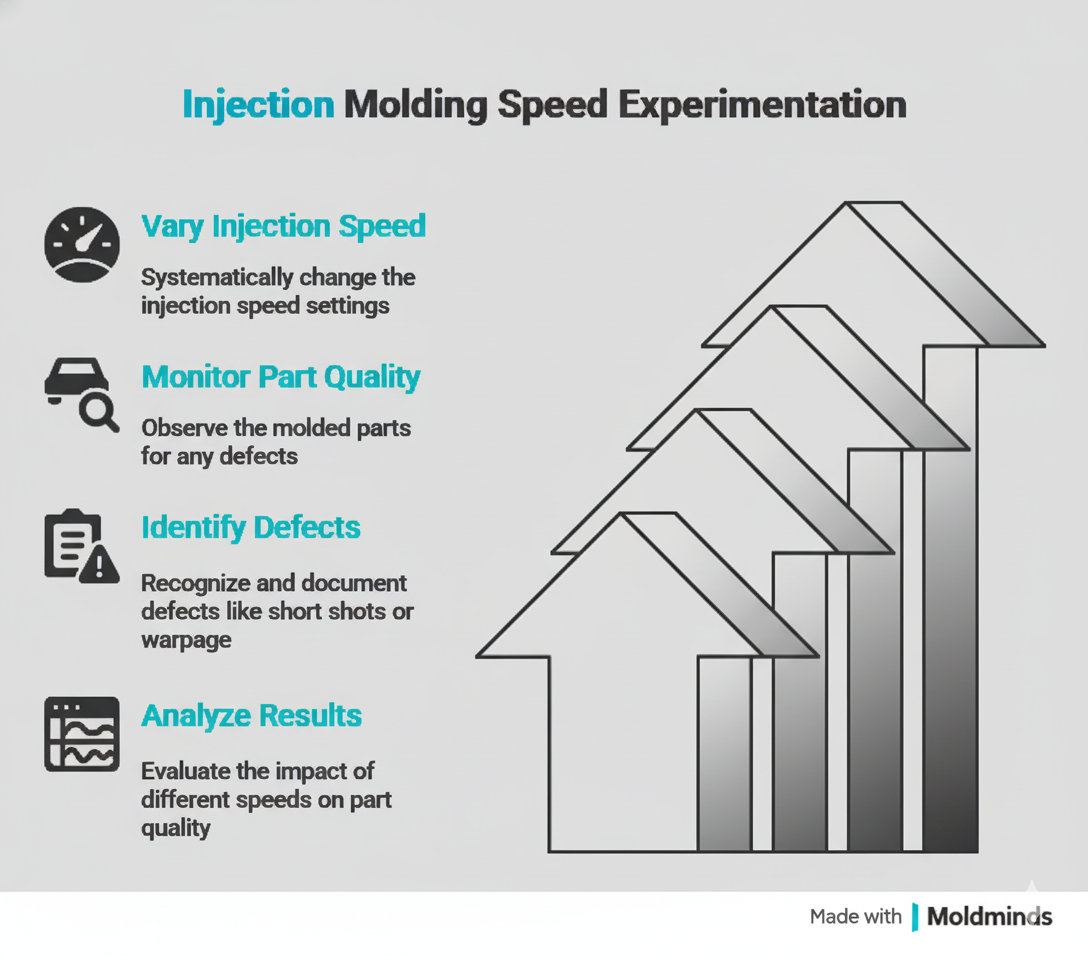
Speed isn’t just about getting parts out the door faster— it’s a key factor that drives lower costs, better quality, and keeps production on schedule. As market demands rise and clients expect tighter timelines, manufacturers have turned to new tech and smarter systems to trim cycle times without cutting corners on quality. Advances like automation, predictive maintenance, and real-time data monitoring are now standard for forward-thinking shops.
Recent breakthroughs in mold design, robotics, and AI are changing the old playbook. These tools help teams spot delays, reduce errors, and shift quickly between jobs. If you want to keep projects on track, boost output, and stay competitive, understanding how to optimize molding speed is more important than ever. This post shows what’s working now and what to watch for in 2025.
Critical Parameters for Injection Molding Speed Optimizations
Getting the most out of injection molding requires more than just running machines faster. It's about tuning a set of core variables that work together to shape cycle time, part quality, and process stability. By understanding and optimizing temperature, speed, pressure, and cooling, you can keep your production smooth and predictable—while still meeting tight deadlines.
Temperature Management: Melt and Mold
Controlling both the melt and mold temperatures is one of the biggest levers for making injection molding faster and more reliable. If the plastic melt is too hot or too cold, it won’t flow right, which can cause burns, bubbles, or incomplete parts. On the flip side, well-tuned temperature lets material flow quickly and fill even tight, intricate cavities with less stress.
Best practices for temperature management include:
- Use dedicated temperature controllers to keep mold zones consistent and avoid hot or cold spots.
- Monitor barrel and nozzle heat settings closely to suit the specific plastic being used.
- Start with lower mold temperatures for faster solidification, then increase as needed to prevent warpage or sink marks.
For the best results, modern shops rely on sensors and closed-loop systems that continually adjust to changing conditions. Good temperature control doesn't just speed things up. It also keeps part quality high and rejects low. For a deep dive on this, check out Optimal Mold Temperatures for Injection Molding, which covers controller types and setup tips. For more practical advice, see A Practical Guide To Optimal Injection Molding Temperature.
Injection Speed and Profile Segmentation
Running the injection press at full speed the whole time is a recipe for flash, short shots, and other defects. That’s why top shops use multi-stage (segmented) speed profiles that tailor the velocity for each section of the fill.
Typical stages involve:
- A fast fill at the start to pack out big features.
- A slower, more controlled speed when flow fronts reach narrow areas or complex geometry.
- An even more gradual push as the cavity nears full to avoid overpacking or stress.
Fine-tuning these stages helps prevent hesitations, cold slugs, or trapped air. It also lets you push the cycle faster without causing defects. Software-controlled profiles can be customized for each tool and resin, giving operators instant feedback as they go. More insights and benefits of this approach can be found in Multistage Injection Speed Control and How Second-Stage Injection Speed Influences Your Process.
Pressure Optimization: Injection and Holding
Pressure and speed work hand-in-hand, but they don’t always rise or fall together. The right balance keeps the material flowing just right at each stage of the shot and ensures the final part cools without sink marks or voids.
- Injection pressure must be high enough to quickly fill the mold, but not so high that it flashes or stresses the tool.
- Holding pressure keeps the resin packed and compensates for material shrinkage as it cools. Too much makes the part too dense; too little causes sink marks.
Making small, precise adjustments to these pressures helps improve resin distribution and part consistency. Frequent monitoring and recipe-based setups allow for rapid changes when switching jobs or materials, reducing downtime and scrap.
Cooling Time and Ejector System Efficiency
Cooling usually eats up more than half of each cycle. That’s why cutting cooling time pays big dividends. The key is to cool just enough to eject the part without distortion or warping—but no more.
- Optimized coolant channel design and water flow speeds up heat transfer.
- Real-time temperature sensors help spot when the part is ready to go, cutting extra seconds off without risking soft parts.
- Advanced ejection systems allow the mold to open as soon as the part holds its shape, timing the ejector pins for smooth, repeatable releases.
New cooling channel designs, like conformal cooling, and the use of baffles or bubbler inserts, also help minimize hot spots. If you’re using real-time monitoring, you can safely adjust cooling and ejection parameters based on what’s happening inside the mold—not just a fixed timer.
injection molding speed optimizationsProcess Control and Automation for Enhanced Speed
Today, smart systems are leading the way in pushing injection molding speed to new limits. By using networked sensors, cloud-connected machinery, AI-driven logic, and big data analytics, shops can do much more than react to problems—they can predict them, tune in real time, and crank out parts faster than ever. If your goal is a process that runs like a well-oiled machine, these new approaches are transforming what’s possible.
IoT Integration and Real-Time Monitoring
Smart factories now rely on sensor networks to keep an eye on every step of the molding process. These sensors track temperature, pressure, humidity, screw speed, mold open/close cycles, and even coolant flow. The power of the Internet of Things (IoT) lies in connecting all these data points, so you get a clear, minute-by-minute view of what’s really happening on the floor.
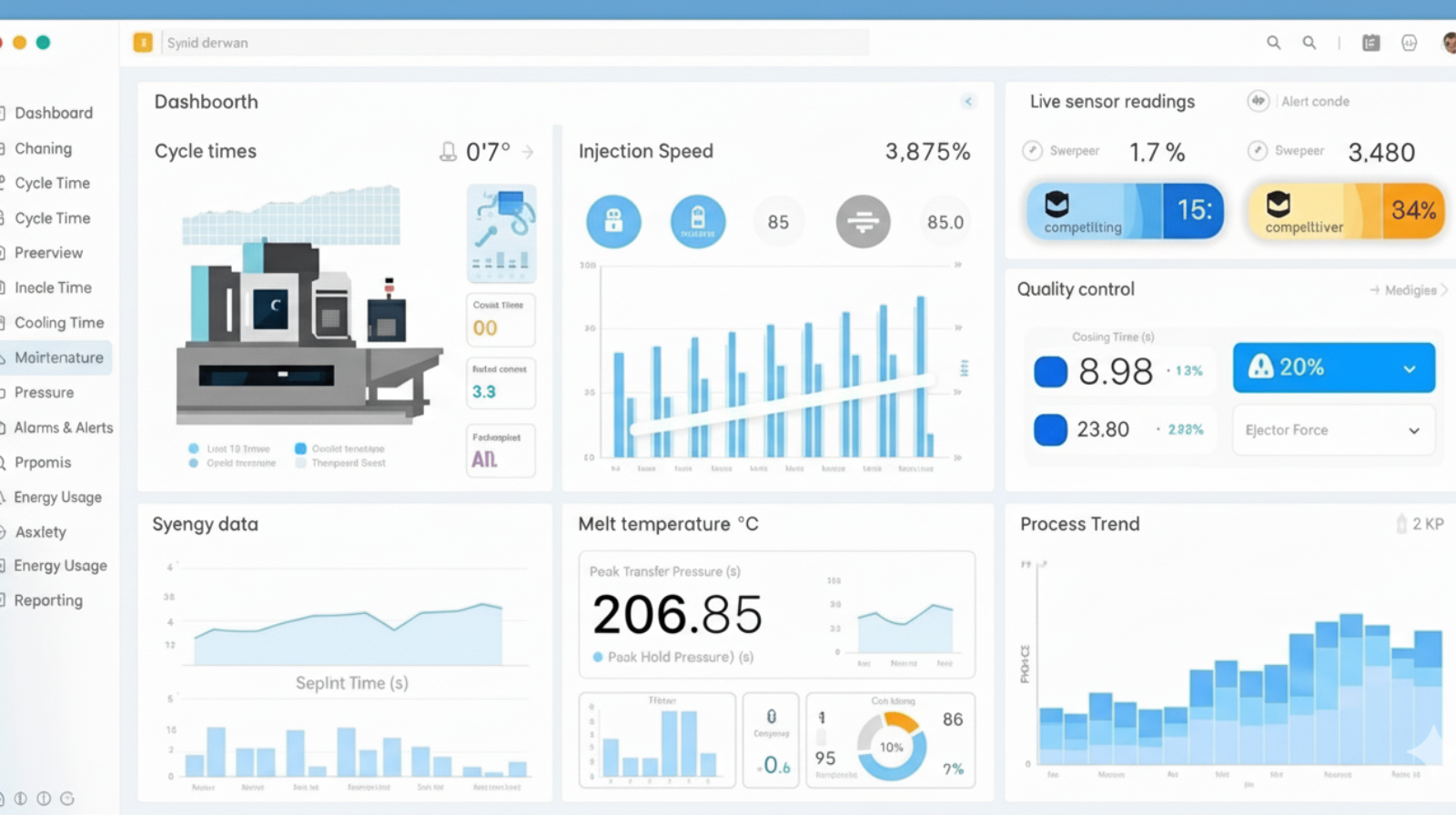
Here’s how IoT strengthens speed and reliability:
- Instant Data Collection: Sensors feed real-time stats to dashboards, allowing teams to spot deviations immediately. If a mold starts running hot or a hydraulic pack slows down, you know before scrap piles up.
- Predictive Maintenance: Monitoring wear-and-tear metrics, like cycle counts and vibration, helps predict when machines need tune-ups, rather than waiting for breakdowns. Keeping presses in top shape avoids unexpected slowdowns.
- Data-Driven Troubleshooting: Instead of guessing why a run stalls, operators dig into logs and pinpoint the glitch. This leads to faster fixes and longer uptime.
Modern shops use these tools to maximize machine uptime and minimize “ghost downtime”—those lost seconds that quietly steal output. For factories looking to level up, articles like How the Industrial Internet of Things (IIoT) Is Improving Injection Molding and Smart Manufacturing in Injection Molding explain how these networks can cut wasted cycles and raise your throughput.
AI and Machine Learning in Process Optimization
Artificial intelligence isn’t just a buzzword—it’s reshaping how injection molders fine-tune for speed. AI and machine learning (ML) can analyze mountains of process data, spot patterns humans miss, and then suggest or even automate changes for the next cycle.
Some key benefits and uses include:
- Adaptive Parameter Tuning: AI platforms review cycle data and keep tweaking press settings—like injection speed, holding pressure, or mold temps—so producers get as close as possible to the perfect run, every run.
- Speed Bottleneck Prediction: Machine learning models look for trends in cycle slowdown (like cooling lags or fill-time creep) and sound the alarm early, helping shops address small snags before they become production-stopping issues.
- Recipe Optimization: With hundreds of variables in play, AI can run virtual tests to suggest “recipes” that trim seconds without raising defect risk. It even learns from previous runs to improve over time.
What’s exciting is that operators don’t need a data science degree to benefit. User-friendly dashboards deliver recommendations, flag warning signs, or adjust settings automatically for optimum pace. This isn’t the future—it’s showing strong results now. For more insight into practical applications, check out AI Process Optimization: What It is, Benefits & Examples and What Is AI Process Optimization? (+ Industry Examples).
Advanced Mold and Machine Technologies
Today's fastest molders aren't just relying on good process control—they're pushing speed and efficiency with smarter machines and advanced mold tech. Modern presses, new cooling layouts, and creative material strategies are breaking long-held limits in cycle time. Let's see how the newest equipment and mold ideas set the pace for high-output molding floors.
Electric and Hybrid Machines for Speed and Efficiency
Electric injection molding machines are known for tight accuracy, quick motions, and low power use. Unlike traditional hydraulic presses, electrics use servo motors to drive the main movements—clamp, injection, ejection—so power is delivered only when needed. This design keeps cycle times lean and repeatable.
Hybrid machines mix the best of both worlds: electric-driven functions with hydraulic support where raw force is needed. They often use electric for main moves, with hydraulics only for high-pressure needs like packing or ejection.
When comparing the three:
- Cycle time: All-electric machines offer the fastest, most precise cycles. Hydraulics tend to be slower. Hybrids come close to all-electric speed, shining in bigger tools.
- Accuracy: Electric presses hold tight tolerances shot after shot, perfect for complex plastic part design. Hydraulics are less accurate.
- Energy consumption: Electric presses can use 50-70% less energy than older hydraulic machines.
For a closer look at how these machines match up, see this detailed comparison at Electric vs. Hydraulic injection molding machines, and how hybrids bridge the gap in Hybrid vs. electric injection molding machines: Debate continues.
Mold Design Innovations: Conformal Cooling & Coatings
Fast cycles start with cool molds. Getting heat out of the part as fast as possible lets it eject sooner. Old-school straight cooling lines are giving way to conformal cooling: channels shaped to hug every curve of the cavity, keeping temps steady and heat moving out.
Why are these new channels a big deal?
- They bring cooling closer to the part’s hot spots, avoiding uneven solidification and warping.
- Cycle times drop because heat is pulled out faster and more evenly.
- Parts are less likely to have sink marks or visible weld lines.
For details on how these channels work, check out Conformal Cooling for Injection Molding and Conformal Cooling: What It is and Why to Use It.
There's more. High-tech coatings and surface treatments cut friction and keep resin from sticking, helping the part release smoothly at ejection. Coated inserts, especially for high-wear or multi-material systems, last longer and keep cycle times fast job after job.
Material Selection and Preparation Strategies
Speed in injection molding isn’t just about machines or technology—it starts with what goes into the press. Choosing the right materials and prepping them properly lays the groundwork for shorter cycles and consistent results.
High-Flow and Sustainable Materials: Benefits and Trade-Offs
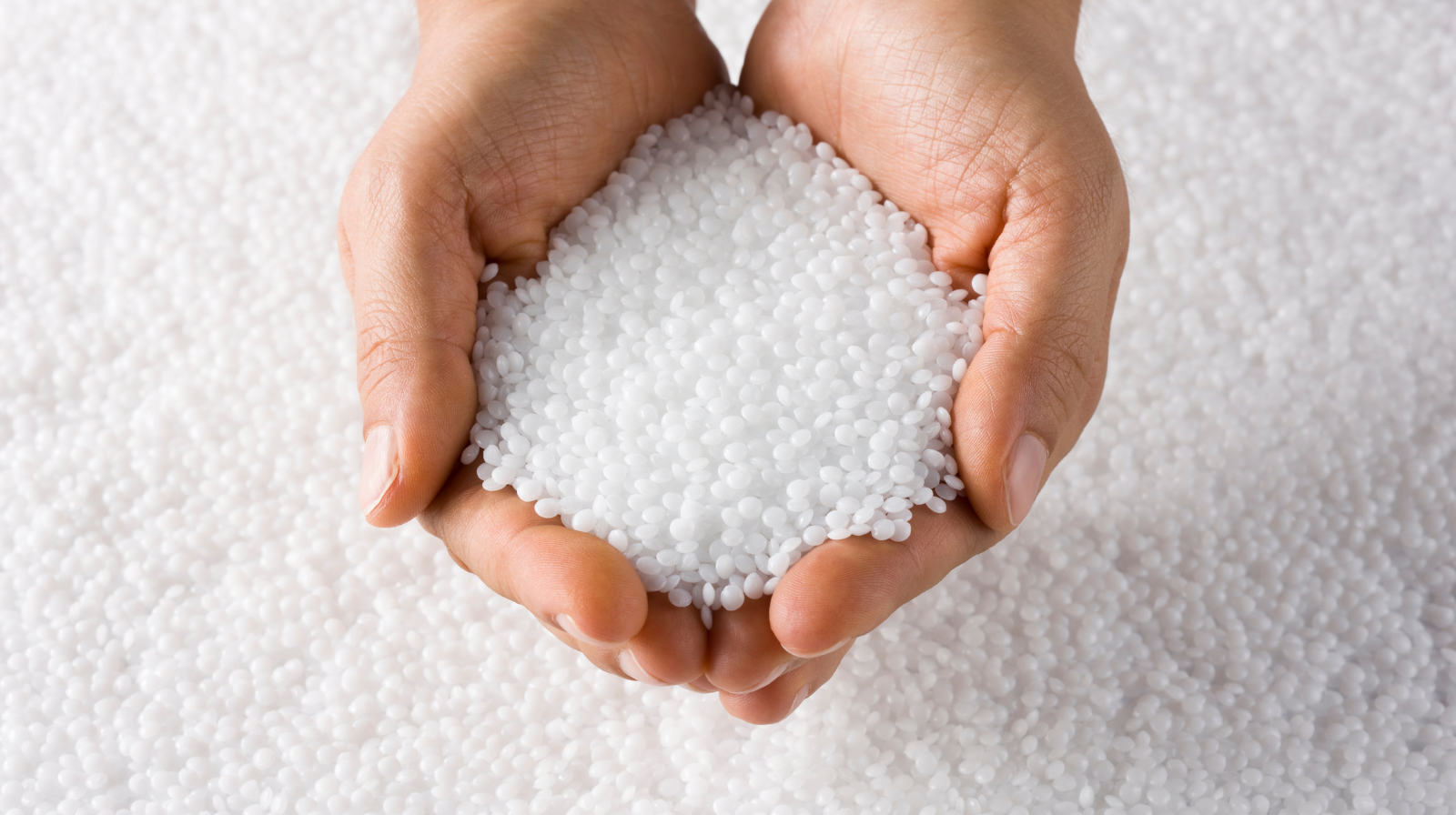
When speed is your target, high-flow materials can be a game changer. These resins fill molds faster and more evenly, reaching thin sections and complex features before the plastic cools. By reducing fill time, you can cut total cycle time.
But every resin comes with trade-offs. Here’s a quick look:
- High-flow virgin polymers: Flow easily at lower pressures, trim injection times, and lower scrap. However, they may require tighter process control to avoid flash.
- Recycled polymers: Lower your material costs and boost sustainability. The downside is potential variability, so you’ll need to test them to keep cycles tight.
- Bio-based and compostable plastics: Satisfy eco-friendly mandates. Some offer good flow, though their moisture sensitivity may require extra care in prep.
This study on polymer selection and recycling offers deep insight into how your choice affects speed and sustainability. For the advantages and disadvantages of bioplastics, Advantages and Disadvantages of Bioplastics Production is a good resource.
Pre-Drying, Additives, and Handling Automation
Material prep is where you can lose or make up plenty of time. Many plastics absorb moisture, which can cause splay, bubbles, or brittleness if not addressed before molding.
- Pre-drying: Good drying habits cut cycle delays. For hygroscopic resins, ovens or hopper dryers pull out water. Check Appropriate Pre-drying of Plastic Molding Materials for details.
- Additives: Flow enhancers and stabilizers can help plastics fill faster and resist degradation.
- Material handling automation: Conveyor-fed dryers and vacuum loaders keep pellets moving, reducing contamination risk and manual labor.
A small investment in prep pays off in less downtime, fewer rejects, and faster cycles. For practical drying tips, Injection Molding Know-How: Drying Tips highlights best practices.
Data-Driven Optimization and Statistical Process Control (SPC)
Injection molding speed no longer depends on guesswork. Manufacturers now use data analytics, simulation software, and statistical tools to unlock new levels of speed and efficiency. These digital methods help teams cut trial-and-error, validate what works, and make sure improvements stick.
Process Simulation and Mold Flow Analysis
Simulation technology now acts like a time machine for molders. Before a single shot, mold flow analysis lets engineers test cycle times, mold filling, and cooling patterns in a virtual world.
By using software simulation, shops can:
- Visualize material flow and spot zones where fill might lag or trap air.
- Experiment with parameters like injection speed and temperature without risk.
- Reduce physical trial cycles, as the software highlights optimal settings.
- Identify bottlenecks early, streamlining gate sizing and runner paths.
Simulation tools like Moldex3D and Autodesk Moldflow are standard in modern mold shops. They give practical answers for faster cycle times, lower scrap, and more reliable part ejection.
Statistical Methods for Continuous Improvement
Speed gains stick when you use numbers to track the process. Statistical process control (SPC) and proven experiment designs give molders the firepower to make changes that last.
Key statistical methods include:
- Design of Experiments (DOE): Lets you adjust several variables together to see which combo truly slashes cycle time.
- Taguchi Methods: Help find “sweet spot” process settings that resist outside noise (like shop temperature swings).
- Analysis of Variance (ANOVA): When several factors affect cycle time, ANOVA tells you which matter most.
By integrating SPC, operators don’t just fix today’s problems—they continuously monitor quality and spot drifts. ASQ’s guide on Statistical Process Control explains core tools, while this SPC Guide breaks down how live data supports long-term improvements.
With data collection platforms, every shot adds to a knowledge base. Systems from Shoplogix and Kistler help convert data into concrete actions, making faster cycles the norm.
Conclusion
Bringing together the right technologies and proven practices is key for faster, smarter injection molding. Teams who combine advanced machines, automated data systems, and sharp process control see shorter cycles, stronger quality, and more reliable output shift after shift.
Leaning into innovation—whether it’s better cooling, AI-driven tuning, or eco-friendly resins—helps your operation keep pace with tough deadlines and sustainability goals. Rely on data, act on real-time feedback, and stay open to new approaches that push the limits of what’s possible.
Thanks for reading. Want to share your own tips or challenges with molding speed? Drop a comment or connect to keep the conversation going. Faster, better, and greener production is within reach if you keep both technology and technique in focus.