

Tool and Die Maker Salary Guide 2025: Complete Breakdown with Interactive Calculator
Published on | By MoldMinds Staff | 12 min read
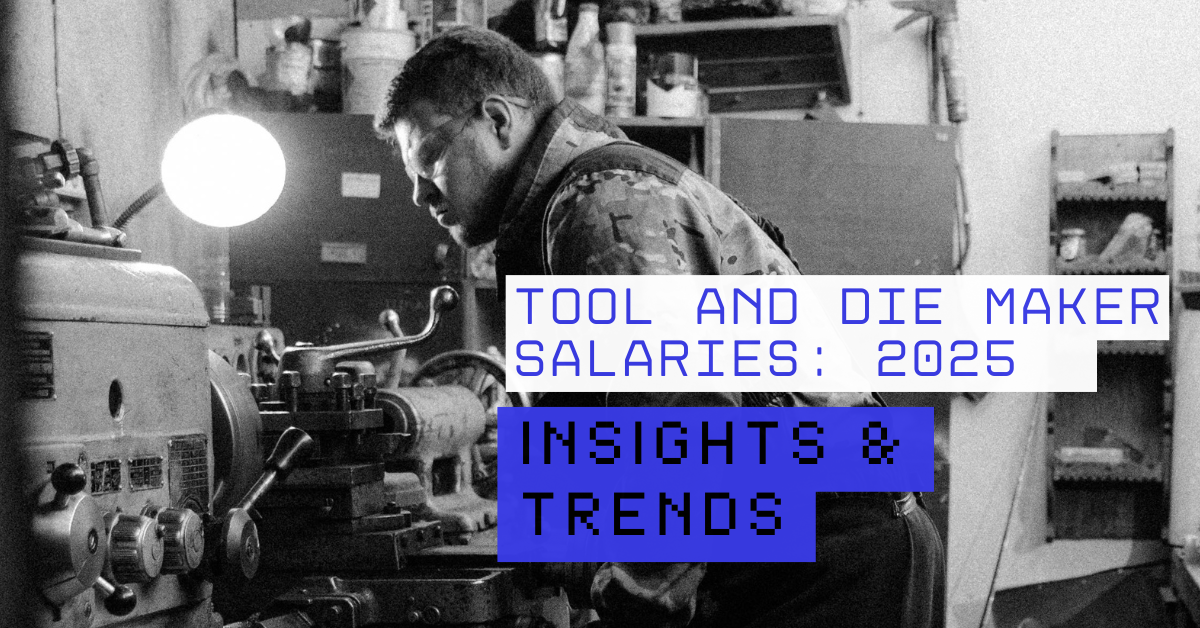
How much do tool and die makers really earn in 2025? The answer isn't simple—salaries range from $45,000 for entry-level positions to over $120,000 for master toolmakers with specialized skills. Your earning potential depends on location, experience, specialization, certifications, and industry.
This comprehensive guide gives you real 2025 salary data and an interactive calculator to estimate your exact earning potential. Whether you're considering a career in tool and die making, negotiating your current salary, or planning your career progression, you'll find the numbers and strategies you need.
Quick Salary Overview
National Average: $65,400/year
Entry Level (0-2 years): $42,000 - $48,000
Experienced (8-15 years): $68,000 - $82,000
Master Toolmaker (20+ years): $95,000 - $125,000
Top Paying State: California - $78,500 average
Key Takeaways
- Experience is king: Master toolmakers earn 2.5x more than entry-level workers
- Location matters: $35K+ salary difference between highest and lowest paying states
- Specialization pays: Injection mold toolmakers earn 15-25% more than general toolmakers
- Certifications work: NIMS Level 2+ certification adds $6K-12K to base salary
- Skills premium: 5-axis programming and CAD/CAM expertise can add $15K+ annually
- Total compensation: With overtime and shift differentials, total earnings can exceed base by 50%
- Job outlook: Steady demand with 7% projected growth through 2033
- Use our calculator below to estimate YOUR specific earning potential
🧮 Tool & Die Maker Salary Calculator
Estimate your earning potential based on your experience, location, and skills
💰 Your Estimated Earnings
💡 How to Increase Your Earnings
Detailed Tool and Die Maker Salary Breakdown
By Experience Level
| Experience Level | Years | Salary Range | Average |
|---|---|---|---|
| Entry Level / Apprentice | 0-2 | $38,000 - $48,000 | $42,500 |
| Junior Toolmaker | 3-5 | $48,000 - $58,000 | $52,800 |
| Journeyman | 6-10 | $58,000 - $72,000 | $65,400 |
| Senior Toolmaker | 11-20 | $72,000 - $90,000 | $80,500 |
| Master Toolmaker | 20-30 | $90,000 - $115,000 | $102,800 |
| Expert / Consultant | 30+ | $105,000 - $135,000 | $118,500 |
Career Progression Insight: The steepest salary increases occur between years 5-15 of experience. This is when toolmakers transition from executing designs to leading projects and mentoring apprentices. Master toolmakers with 25+ years of experience and specialized skills can command premium salaries, especially in aerospace and medical device manufacturing.
Top 15 Paying States for Tool and Die Makers
| Rank | State | Average Salary | vs National Avg |
|---|---|---|---|
| 1 | California | $78,500 | +20.0% |
| 2 | Washington | $74,800 | +14.4% |
| 3 | Massachusetts | $73,200 | +11.9% |
| 4 | Connecticut | $72,100 | +10.2% |
| 5 | New Jersey | $70,800 | +8.3% |
| 6 | Michigan | $69,500 | +6.3% |
| 7 | Illinois | $68,200 | +4.3% |
| 8 | Oregon | $67,400 | +3.1% |
| 9 | Ohio | $66,800 | +2.1% |
| 10 | Wisconsin | $65,900 | +0.8% |
| 11 | Pennsylvania | $65,100 | -0.5% |
| 12 | Indiana | $64,200 | -1.8% |
| 13 | Minnesota | $63,800 | -2.4% |
| 14 | New York | $63,500 | -2.9% |
| 15 | Tennessee | $62,400 | -4.6% |
Best Value States: While California pays the highest salaries, states like Michigan, Ohio, and Wisconsin offer excellent value when factoring in cost of living. A $69,500 salary in Michigan provides similar or better purchasing power than $78,500 in California due to housing costs, taxes, and overall living expenses.
Salary by Specialization
Not all tool and die making is created equal. Specialization significantly impacts earning potential, with some areas commanding 25%+ premiums over general toolmaking.
| Specialization | Salary Range | Average | Premium vs General |
|---|---|---|---|
| Injection Mold Toolmaking | $68,000 - $95,000 | $80,500 | +23% |
| Aerospace Tooling | $72,000 - $98,000 | $84,200 | +29% |
| Progressive Die Making | $70,000 - $92,000 | $79,800 | +22% |
| Medical Device Tooling | $71,000 - $96,000 | $82,400 | +26% |
| Die Casting Die Making | $64,000 - $85,000 | $73,800 | +13% |
| Stamping Die Making | $62,000 - $82,000 | $71,200 | +9% |
| Prototype & Custom Tooling | $72,000 - $98,000 | $83,500 | +28% |
| Tool Maintenance | $55,000 - $72,000 | $62,800 | -4% |
| General Tool & Die Making | $58,000 - $76,000 | $65,400 | Baseline |
Why Injection Mold Toolmaking Pays More: Injection mold toolmakers earn premium salaries due to the complexity of mold design, tight tolerances (often ±0.001" or tighter), multi-cavity coordination, hot runner systems, and the high cost of errors. A single mistake in mold design can cost $50K-200K in steel and machine time. This specialization also requires extensive knowledge of plastic material behavior, flow analysis, and cooling optimization.
Salary by Industry
| Industry | Average Salary | Premium | Job Market |
|---|---|---|---|
| Aerospace & Defense | $84,200 | +29% | Moderate demand, stringent requirements |
| Medical Devices | $82,400 | +26% | Growing demand, FDA compliance needed |
| Automotive - OEM | $72,500 | +11% | High demand, especially EV tooling |
| Electronics Manufacturing | $70,800 | +8% | Growing, precision requirements |
| Automotive - Tier 1 Suppliers | $68,200 | +4% | High volume, steady demand |
| Consumer Products | $64,100 | -2% | Moderate demand, cost-sensitive |
| General Manufacturing | $62,800 | -4% | Stable, broad opportunities |
Skills That Command Higher Salaries
Certain technical skills can add $5,000 to $20,000+ to your annual salary. Here are the most valuable skills for tool and die makers in 2025:
High-Value Technical Skills
| Skill | Salary Premium | Learning Time | Demand Level |
|---|---|---|---|
| 5-Axis CNC Programming & Operation | +$12,000 - $18,000 | 12-18 months | Very High |
| CAD/CAM Mastery (Mastercam, PowerMill) | +$8,000 - $15,000 | 8-12 months | Very High |
| Wire & Sinker EDM Programming | +$6,000 - $10,000 | 6-9 months | High |
| Moldflow Analysis Software | +$10,000 - $16,000 | 4-6 months | Very High (Injection Molding) |
| Advanced Metrology & CMM Programming | +$5,000 - $9,000 | 6-8 months | High |
| Solidworks/CAD Design | +$7,000 - $12,000 | 6-10 months | Very High |
| GD&T (Geometric Dimensioning & Tolerancing) | +$4,000 - $7,000 | 3-4 months | High |
| Hot Runner System Design | +$8,000 - $14,000 | 12-18 months | High (Injection Molding) |
| Surface Grinding & Finishing | +$3,000 - $6,000 | 4-6 months | Moderate |
| Manual Machining (Lathe, Mill, Grinder) | +$2,000 - $5,000 | 6-12 months | Moderate (Foundation skill) |
Skill Stacking Strategy: The most successful toolmakers combine multiple high-value skills. For example, a toolmaker with Mastercam expertise (+$10K), 5-axis programming (+$15K), and Moldflow analysis (+$12K) can command salaries $35K+ above baseline. These skills compound rather than simply add together because they make you uniquely valuable.
Valuable Soft Skills
While technical skills drive base salary, soft skills determine promotion potential and leadership opportunities:
- Problem Solving & Troubleshooting: Critical for senior roles, adds $5K-10K
- Project Management: Lead toolmaker roles, adds $8K-15K
- Training & Mentorship: Master toolmaker requirement, adds $6K-12K
- Customer Communication: Important for prototype shops, adds $4K-8K
- Process Documentation: Required for aerospace/medical, adds $3K-6K
- Team Leadership: Shop supervisor track, adds $12K-20K
Certifications Worth Getting (And Their ROI)
Not all certifications are created equal. Here's a realistic breakdown of which certifications provide the best return on investment for tool and die makers:
| Certification | Cost | Time | Salary Increase | Break-Even |
|---|---|---|---|---|
| NIMS Level 2 Machining | $800 - $1,200 | 6-12 months | +$6,000 - $8,000/year | 2 months |
| NIMS Tool & Die Specialty | $1,000 - $1,500 | 12-18 months | +$8,000 - $12,000/year | 2 months |
| Mastercam Certification | $2,000 - $3,500 | 6-9 months | +$7,000 - $11,000/year | 3-4 months |
| AWS Certified Welder | $500 - $800 | 3-6 months | +$3,000 - $5,000/year | 2 months |
| Solidworks Professional (CSWP) | $1,200 - $2,000 | 6-8 months | +$6,000 - $10,000/year | 3 months |
| CMM Programming Certification | $1,500 - $2,500 | 4-6 months | +$4,000 - $7,000/year | 4-5 months |
Certification Priority: If you're just starting, get NIMS Level 2 first—it's the industry standard and employers recognize it nationwide. Once you have that foundation, specialize based on your career direction: Mastercam for programming-focused roles, Solidworks for design work, or specialized certifications for injection molding, aerospace, or medical device work.
Total Compensation Beyond Base Salary
When evaluating job offers or negotiating salary, consider the complete compensation package. Benefits, overtime opportunities, and other perks can add 30-50% to your base salary.
Complete Compensation Breakdown
| Component | Typical Value | % of Employers Offering |
|---|---|---|
| Base Salary | $65,400 | 100% |
| Overtime Pay (avg 500 hrs/year) | +$23,475 (time-and-a-half) | 85% |
| Shift Differential (2nd/3rd shift) | +$3,270 - $4,905 | 70% |
| Health Insurance (employer portion) | +$14,000 - $18,000 | 92% |
| 401(k) Match (avg 4% match) | +$2,616 - $3,560 | 76% |
| Paid Time Off (3 weeks avg) | +$3,769 (value) | 88% |
| Annual Bonus / Profit Sharing | +$2,000 - $5,000 | 48% |
| Tool Allowance | +$500 - $2,000 | 62% |
| Continuing Education / Training | +$1,000 - $3,000 | 54% |
| Dental & Vision Insurance | +$1,200 - $2,000 | 78% |
| Life Insurance | +$500 - $800 | 82% |
| Prescription Drug Coverage | +$1,500 - $2,500 | 90% |
| Total Package Estimate | $118,200 - $134,700 | - |
Total Compensation Example
Journeyman Toolmaker with Overtime
Base Salary: $65,400
Overtime (10 hrs/week): +$23,475
2nd Shift Premium: +$3,270
Health Insurance: +$16,000
401(k) Match: +$2,616
PTO Value: +$3,769
Annual Bonus: +$3,000
Tool Allowance: +$1,000
TOTAL PACKAGE: $118,530
That's 81% more than base salary!
Overtime Opportunity: Many tool and die shops struggle to find qualified workers and offer substantial overtime. A toolmaker willing to work 10-15 hours of overtime per week can add $20K-35K annually. Some shops run 6-day weeks or 12-hour shifts with premium pay. This overtime potential is one reason experienced toolmakers can out-earn many 4-year degree holders.
Career Progression Timeline & Salary Growth
Understanding the typical career path helps you plan your development and salary expectations. Here's what progression looks like for tool and die makers:
| Stage | Years | Typical Responsibilities | Salary Range |
|---|---|---|---|
| Apprentice / Helper | 0-2 | Learning fundamentals, machine operation, blueprint reading, assisting journeyman toolmakers | $38K - $48K |
| Junior Toolmaker | 3-5 | Independent on standard tasks, basic CNC programming, conventional machining, tool assembly | $48K - $58K |
| Journeyman Toolmaker | 6-10 | Full project responsibility, complex CNC programming, EDM work, training apprentices | $58K - $72K |
| Senior Toolmaker | 11-20 | Lead complex projects, 5-axis programming, design input, troubleshooting specialist | $72K - $90K |
| Master Toolmaker | 20-30 | Design leadership, process development, training programs, quality standard setting | $90K - $115K |
| Expert / Consultant | 30+ | Strategic consulting, advanced problem solving, industry expertise, specialized applications | $105K - $135K |
Alternative Career Paths
Not everyone wants to stay on the tools forever. Here are common career transitions:
- Tool Room Supervisor: $75K-95K, managing 5-15 toolmakers
- Manufacturing Engineer: $80K-105K, process optimization and new tool introduction
- Quality Manager: $85K-110K, overseeing inspection and quality systems
- Tool Design Engineer: $85K-115K, full-time CAD design work
- Independent Consultant: $100K-200K+, working with multiple companies
- Shop Owner: Variable income, entrepreneurial path
Management Track vs. Technical Track: Many experienced toolmakers face this choice around year 15-20. Management positions (supervisor, manager) typically pay 15-25% more but require people management skills and often less hands-on work. The technical track (master toolmaker, specialist) lets you stay on the tools while still commanding high salaries, especially in specialized areas like aerospace or medical device tooling.
Proven Strategies to Increase Your Tool & Die Maker Salary
Immediate Actions (0-3 Months)
1. Negotiate Your Current Salary
If you haven't had a raise in 12+ months and you've developed new skills, it's time to ask. Prepare by:
- Documenting accomplishments and new skills acquired
- Researching comparable salaries in your area (use our calculator above)
- Requesting a meeting with your supervisor
- Coming prepared with specific numbers and market data
Expected Increase: 5-12% for strong performers with market data
2. Pick Up Strategic Overtime
If your shop offers overtime, even 5-10 hours per week adds substantial income. At time-and-a-half, 10 hours/week = $23,475 extra annually on a $65K salary.
Potential Increase: +$12K-35K annually depending on availability
3. Switch to 2nd or 3rd Shift
If you can handle evening or night hours, shift differentials add 10-15% to base pay with less supervision and often better access to equipment.
Potential Increase: +$6,540-$9,810 annually on $65K base
Short-Term Strategy (6-18 Months)
4. Get NIMS Certified
If you don't have NIMS Level 2, this should be your priority. It's the industry standard certification and is recognized nationwide.
- Cost: $800-$1,200
- Time: 6-12 months (while working)
- Salary increase: $6K-8K annually
- ROI: Pays for itself in 2 months
5. Master CAD/CAM Software
Mastercam and PowerMill are the industry standards. Becoming proficient opens doors to programming positions and significantly increases your value.
- Learning time: 8-12 months to proficiency
- Certification cost: $2K-3.5K
- Salary increase: $8K-15K
- Many shops will pay for training
6. Learn 5-Axis Programming
5-axis CNC programming is in extremely high demand and short supply. This skill alone can command premium salaries.
- Learning time: 12-18 months
- Salary premium: $12K-18K
- Opens positions at aerospace and medical device companies
Long-Term Strategy (2-5 Years)
7. Specialize in High-Demand Areas
Top specializations for 2025-2030:
- Injection Mold Toolmaking: +$15K-20K, steady demand
- Aerospace Tooling: +$18K-25K, stringent but high-paying
- Medical Device Tooling: +$16K-22K, growing rapidly
- EV Battery Tooling: +$12K-20K, emerging field
- Prototype Tooling: +$18K-24K, creative problem-solving
8. Relocate to High-Paying States or Metros
Geographic arbitrage can be the single biggest salary increase. Consider:
- California Bay Area: $85K-110K for experienced toolmakers
- Seattle metro: $78K-98K
- Detroit metro: $72K-92K (excellent value with lower COL)
- Boston metro: $75K-95K
Potential Increase: $15K-30K with relocation
9. Take on Leadership Responsibilities
Start mentoring apprentices, leading projects, or coordinating work. This positions you for:
- Lead toolmaker roles (+$8K-12K)
- Tool room supervisor (+$15K-25K)
- Manufacturing engineering (+$20K-40K)
10. Build a Consulting Side Business
Once you're a master toolmaker, freelance consulting can add $20K-60K+ annually:
- Troubleshooting for small shops
- Design review and optimization
- Training programs
- Expert witness work for legal cases
Job Market Outlook & Future Demand
The million-dollar question: Is tool and die making a dying trade? The short answer: No, but it's evolving.
Bureau of Labor Statistics Projections
| Metric | Current (2025) | Projected (2033) | Change |
|---|---|---|---|
| Total Jobs | 68,400 | 73,200 | +7% |
| Annual Job Openings | 4,200 | 4,800 | +14% |
| Median Salary | $65,400 | $72,800 (projected) | +11% |
| Retirement Wave | - | 35% of workforce | Opportunity! |
Where Demand is Growing
High-Growth Areas:
- Electric Vehicle Tooling: Battery housings, motor components, structural parts—new designs requiring new tooling
- Medical Device Manufacturing: Aging population driving demand for implants, surgical instruments, diagnostic equipment
- Aerospace & Defense: Ongoing modernization programs, new aircraft designs, satellite components
- Reshoring Manufacturing: Companies bringing production back to US creating tooling demand
- Advanced Materials: Carbon fiber molds, ceramic tooling, high-temp polymers requiring specialized expertise
- Micro-Manufacturing: Miniaturized components for electronics, medical devices requiring precision toolmaking
The Automation Reality
Let's address the elephant in the room: Yes, CNC machines and automation have changed toolmaking. But here's what's actually happening:
What Automation Does:
- Replaces repetitive manual machining operations
- Speeds up material removal and roughing operations
- Improves consistency on high-volume parts
- Handles simple programming tasks
What Automation CANNOT Do:
- Design complex tooling from customer requirements
- Troubleshoot when things go wrong
- Make critical decisions about tool construction
- Adapt to unique challenges on every project
- Understand material behavior and manufacturing processes
- Optimize designs for manufacturability
- Train the next generation of toolmakers
The truth: Automation has made toolmakers more productive, not obsolete. Skilled toolmakers now program and oversee multiple CNC machines, design in CAD/CAM, and solve problems machines can't handle. These tech-forward toolmakers are in higher demand than ever.
The Skills Gap Crisis: The tool and die industry faces a critical shortage of skilled workers. Baby boomer retirements are accelerating, and fewer young people are entering the trades. This creates enormous opportunity for current and aspiring toolmakers:
- 35% of current workforce retiring by 2033
- Only 12,000 annual graduates from apprenticeship programs
- Need for 15,000+ new toolmakers annually to meet demand
- Result: Higher wages, better benefits, more opportunity
Frequently Asked Questions About Tool and Die Maker Salaries
The national average salary for tool and die makers in 2025 is $65,400 per year, or approximately $31.44 per hour. However, actual salaries range from $42,000 for entry-level positions to over $120,000 for master toolmakers with specialized skills. Your specific salary depends on experience level, geographic location, specialization, certifications, and industry. Use our interactive calculator above to estimate your earning potential based on your specific situation.
California is the highest paying state for tool and die makers with an average salary of $78,500, which is 20% above the national average. Washington state comes in second at $74,800, followed by Massachusetts at $73,200. However, it's important to consider cost of living—states like Michigan ($69,500 average) and Ohio ($66,800 average) offer excellent value when housing costs and taxes are factored in. A $69,500 salary in Michigan provides similar or better purchasing power than $78,500 in California.
Entry-level tool and die makers and apprentices typically earn between $38,000 and $48,000 annually, with an average starting salary of $42,500. This translates to approximately $20-23 per hour. As you gain experience and complete your apprenticeship (typically 4 years), your salary will increase significantly. Junior toolmakers with 3-5 years of experience average $52,800, while journeyman toolmakers with 6-10 years earn an average of $65,400. The key is that tool and die making offers clear progression—your salary grows substantially with experience and skill development.
Yes, tool and die makers make excellent money, especially when you consider total compensation. The average salary of $65,400 is well above the US median household income of $54,132. When you add overtime opportunities (which can add $15K-30K), shift differentials, and excellent benefits, total compensation often exceeds $100,000 annually for experienced toolmakers. Master toolmakers with specialized skills easily earn $100K-125K+. Additionally, tool and die making offers strong job security, no student loan debt (apprenticeships are paid), and the ability to earn while you learn. Many toolmakers out-earn college graduates without taking on debt.
The highest-value skills for tool and die makers are: (1) 5-axis CNC programming and operation (+$12K-18K), (2) Advanced CAD/CAM mastery like Mastercam or PowerMill (+$8K-15K), (3) Moldflow analysis software for injection molding (+$10K-16K), (4) EDM programming for wire and sinker machines (+$6K-10K), and (5) Hot runner system design for injection molds (+$8K-14K). The most successful strategy is "skill stacking"—combining multiple high-value skills. For example, a toolmaker with Mastercam expertise, 5-axis programming, and Moldflow analysis can command salaries $30K-40K above baseline because these skills compound rather than simply add together.
No, tool and die making is not dying—it's evolving and actually facing a critical shortage of skilled workers. The Bureau of Labor Statistics projects 7% growth through 2033, with approximately 4,800 annual job openings. The real story is even more positive: 35% of the current workforce is retiring by 2033, creating massive opportunity for current and new toolmakers. While automation has changed the trade, skilled toolmakers are more valuable than ever because they now program CNC machines, design in CAD/CAM, and solve complex problems machines cannot handle. The truth: toolmakers who embrace technology and continuous learning have excellent career prospects, strong job security, and rising wages.
The typical path to becoming a fully qualified tool and die maker takes 4-5 years through a formal apprenticeship program, which combines on-the-job training (approximately 8,000 hours) with classroom instruction (576 hours). You earn a salary while learning, starting around $38K-42K as an apprentice and increasing each year. Alternative paths include vocational technical schools (2 years) followed by 2-3 years of on-the-job experience, or military training programs. However, truly mastering the trade and reaching senior or master toolmaker status takes 15-25 years of experience. The good news: you start earning immediately and your salary increases steadily with experience, with no student loan debt.
The highest-paying certifications for tool and die makers are: (1) NIMS Tool & Die Specialty certification (+$8K-12K annually, cost $1K-1.5K), (2) Mastercam certification for CAM programming (+$7K-11K, cost $2K-3.5K), (3) Solidworks Professional (CSWP) for design work (+$6K-10K, cost $1.2K-2K), and (4) NIMS Level 2 Machining as a foundation (+$6K-8K, cost $800-1.2K). All of these certifications have excellent ROI, typically paying for themselves within 2-4 months. The best strategy is to start with NIMS Level 2 as your foundation, then specialize based on your career direction—Mastercam for programming-focused roles, Solidworks for design work, or industry-specific certifications for aerospace, medical, or injection molding.
Yes, injection mold toolmakers earn significantly more than general tool and die makers—typically 15-25% more with average salaries of $80,500 compared to $65,400 for general toolmaking. This premium exists because injection mold toolmaking requires specialized knowledge of plastic material behavior, flow analysis, cooling optimization, tight tolerances (often ±0.001" or tighter), multi-cavity coordination, and hot runner systems. A single mistake in mold design can cost $50K-200K in steel and machine time, so companies pay premium salaries for expertise. Other high-paying specializations include aerospace tooling ($84,200 average) and medical device tooling ($82,400 average), both of which command premiums due to stringent quality requirements and regulatory compliance.
Aerospace toolmakers earn significantly more than automotive toolmakers—approximately $84,200 average for aerospace versus $72,500 for automotive OEMs and $68,200 for automotive Tier 1 suppliers. This $11,700-16,000 premium exists because aerospace tooling requires tighter tolerances, exotic materials (titanium, Inconel, composites), more stringent documentation and traceability, AS9100 quality standards, and often security clearances. However, automotive tooling offers higher volume work, more consistent employment, and generally faster-paced environments. The automotive EV sector is growing rapidly and starting to offer salaries closer to aerospace levels ($75K-88K) as battery and motor tooling becomes more specialized.
Overtime can add $15,000 to $35,000+ annually to a tool and die maker's base salary. At the average salary of $65,400 ($31.44/hour), time-and-a-half overtime pays $47.16/hour. Working just 10 hours of overtime per week adds $23,475 annually, bringing total earnings to $88,875. Many shops regularly offer 10-20 hours of overtime weekly, especially during busy periods. Some toolmakers work 6-day weeks or 12-hour shifts, potentially adding $30K-35K in overtime earnings. When combined with base salary and benefits, total compensation can easily exceed $110,000-120,000 for experienced toolmakers willing to work overtime. This overtime potential is one reason many tool and die makers out-earn college graduates without student loan debt.
Yes, tool and die makers are in extremely high demand in 2025, and this demand is projected to increase. The industry faces a critical skills shortage with 35% of the current workforce retiring by 2033 while only about 12,000 people graduate from apprenticeship programs annually—far below the 15,000+ needed to replace retirees and meet growth. This shortage is driving up wages (projected 11% increase by 2033), improving benefits, and creating abundant opportunities for current and aspiring toolmakers. Demand is especially strong for toolmakers with modern skills like CAD/CAM programming, 5-axis machining, and specialized knowledge in injection molding, aerospace, or medical device tooling. Shops nationwide are struggling to fill positions, often offering signing bonuses, relocation assistance, and premium salaries to attract qualified toolmakers.
Related Resources
- How to Source Injection Molds from China: Complete 2025 Guide
- Offshore Tooling for Injection Molding: ROI Calculator & Cost Savings Guide
- China vs USA Injection Mold Costs 2025: Complete Comparison
- Injection Molding Tooling Project Management Services
- Common Defects in Plastic Injection Molding: Troubleshooting Guide
Need Expert Injection Molding Guidance?
From offshore tooling strategy to moldflow analysis, MoldMinds brings 15+ years of hands-on expertise to your project.
Get a Free Consultation →