Surgical instrument overmolding succeeds or fails on one thing: the bond between the medical grade polymer and the metal substrate. A weak bond opens microscopic gaps that trap fluid and harbor bacteria after sterilization, which turns a cosmetic defect into a direct patient safety problem.
If you are sourcing an overmolded handle, grip, or seal for a stainless steel or titanium instrument, the tool build is only half the job. The other half is substrate preparation, the right silicone, tooling that registers the metal insert on every shot, and a validated quality system under ISO 13485. This guide walks through all four the way a buyer needs to understand them before signing off on a program.
Key takeaways
- Medical grade silicone bonds to stainless steel or titanium only after a multistage prep sequence: mechanical roughening, plasma activation, and a primer matched to the exact substrate and silicone pairing.
- Platinum cured silicone is preferred for implant adjacent parts because the addition cure reaction leaves no peroxide byproducts, unlike peroxide cured grades that need post baking to drive off volatile acids.
- An overmolded surgical component must hold its bond through autoclave at 121 to 134 degrees Celsius, gamma at 25 to 50 kGy, and ethylene oxide cycles.
- Bond strength is proven by destructive pull testing on production parts, with the target that the bond outlasts the tear strength of the silicone itself.
- ISO 13485:2016 Section 7.5.6 and FDA 21 CFR 820.75 require IQ, OQ, and PQ validation because a bond cannot be fully confirmed by visual inspection.
What materials can actually be overmolded onto surgical instrument substrates?
Medical grade silicone is the default overmold for surgical instruments, but the choice is not a single material call. The substrate is almost always 300 or 400 series stainless steel or titanium, and the overmold has to bond to that metal, survive repeated sterilization, and pass biocompatibility testing under the ISO 10993 family of standards.
Silicone earns its spot because it takes autoclave heat above 130 degrees Celsius and shrugs off gamma radiation and ethylene oxide without breaking down. Where it gets nuanced is the cure chemistry and the grade.
Platinum cured versus peroxide cured silicone
Platinum cured silicone uses an addition cure reaction that leaves no byproducts. Peroxide cured silicone can leave residual acids and usually needs a post bake to remove volatile organic acids. For anything touching tissue or living near an implant, platinum cured is the safe default because it runs cleaner on extractables and leachables. That is a design review decision, not something to sort out at production launch.
Thermoplastic elastomers can work for thin wall soft touch grips and cost less to run, but they carry a narrower sterilization window than silicone. If the instrument sees repeated autoclave cycles, that window matters.
| Overmold option | Best fit | Sterilization notes | Biocompatibility path |
|---|---|---|---|
| Platinum cured silicone (LSR) | Implant adjacent parts, repeated autoclave grips | Autoclave, gamma, EtO, e beam all viable | USP Class VI, ISO 10993, FDA 21 CFR 177.2600 |
| Peroxide cured silicone | Lower cost parts away from tissue | Needs post bake to clear volatile acids | Possible but more extractables to manage |
| Medical thermoplastic elastomer | Thin wall, soft touch, high volume grips | Narrower window, confirm per resin | Per resin ISO 10993 testing |
How do you design the substrate so the overmold bond holds through sterilization?
Bond integrity starts at the substrate, not at the press. Silicone will not stick to bare stainless steel on its own, so the metal has to be prepared in stages before it ever sees the mold.
The multistage prep sequence
A production bond on metal usually needs three steps working together. Skip one and the bond gets unreliable.
- Mechanical roughening. Media blasting raises the surface profile so the silicone has texture to key into.
- Plasma activation. Plasma or corona treatment raises the surface energy of the metal at a molecular level so the primer and silicone can chemically bond rather than just sit on top.
- Matched primer. A primer chosen for the specific substrate and silicone pairing. Suppliers such as Dow, NuSil, Elkem, and Momentive publish primer systems tuned to their LSR grades. The primer is not interchangeable across silicones.
Part specific masking fixtures protect the working geometry of the instrument while making sure every bonding surface gets full, even coverage. On a surgical tool the tolerance for a missed spot is essentially zero.
Geometry that helps the bond survive thermal cycling
Autoclave cycling drives repeated thermal expansion, and silicone and steel expand at very different rates. Thin sections of silicone stretched over metal are where that stress concentrates and where delamination starts. Two design moves reduce the risk: avoid thin wall silicone over large metal spans, and add undercut anchoring features so a mechanical lock backs up the chemical bond under repeated heat.
What does overmolding tooling require that standard injection molds do not?
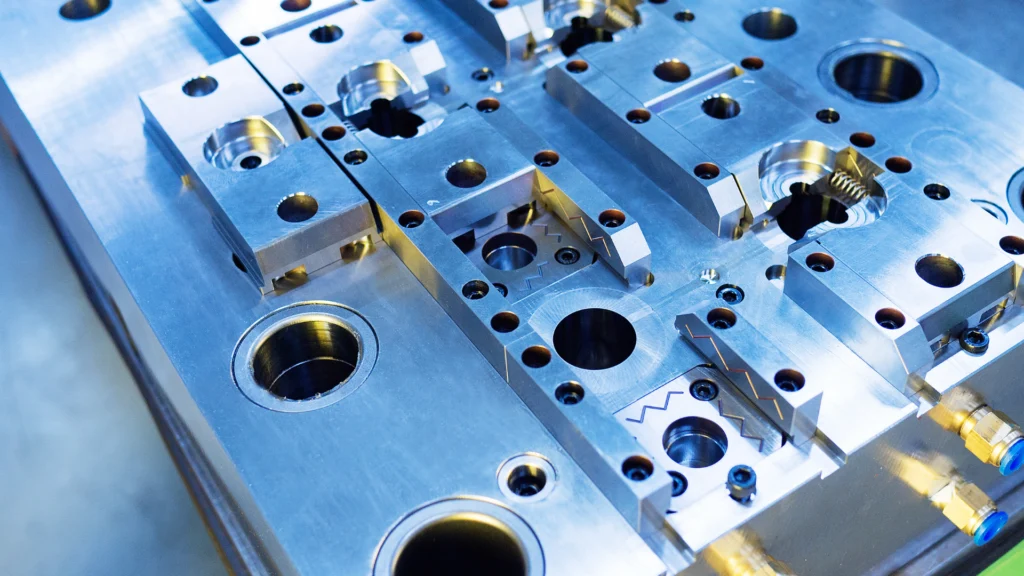
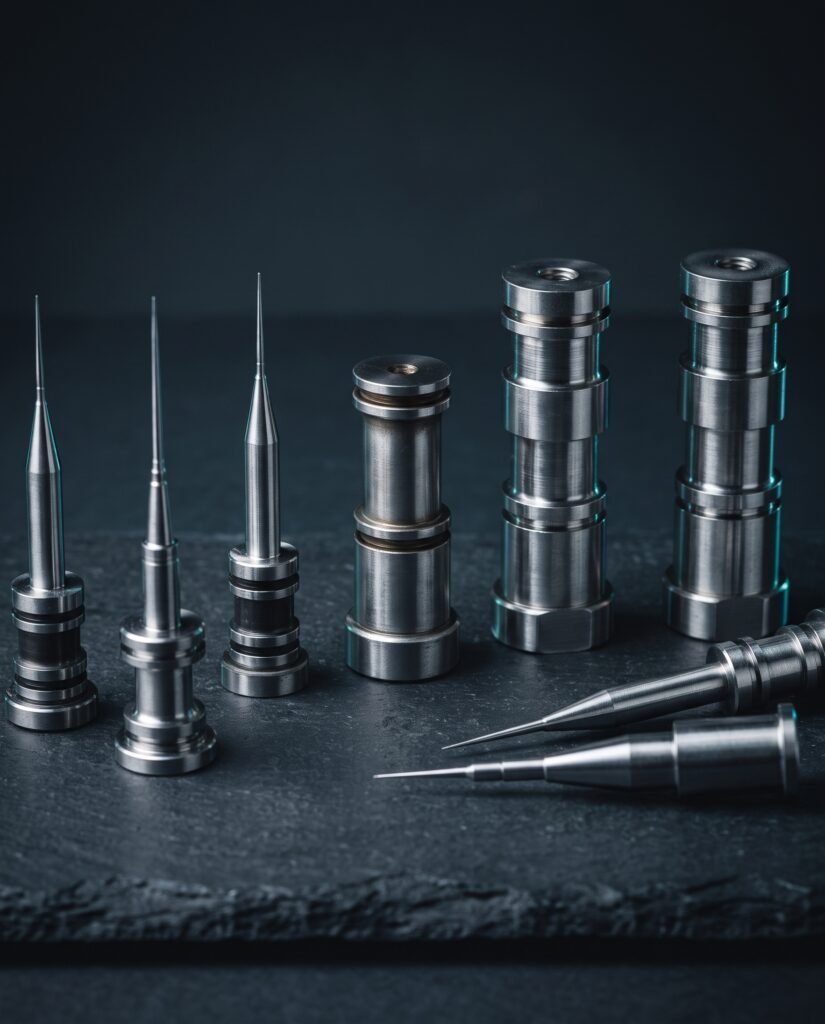
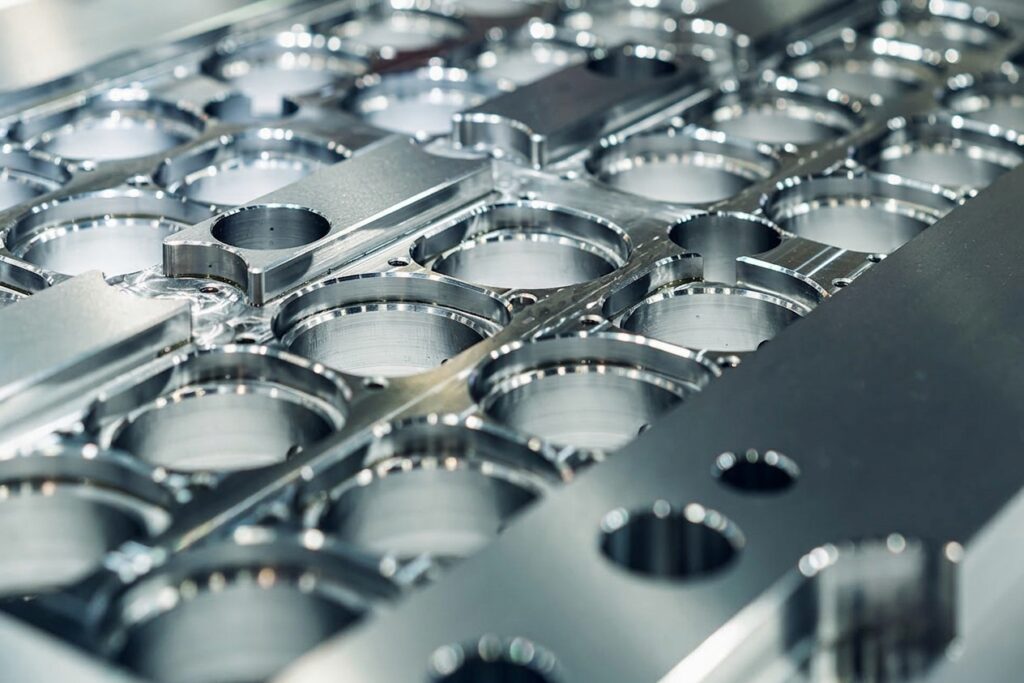
Overmold tooling for a surgical instrument is more complex than a standard injection mold, and the higher tooling cost buys real capability. The tool has to register the metal insert in exactly the same position on every shot. Insert to insert variation in surgical components is real, so the mold needs positive registration features, close fitting locators, and often shutoff detail that seals against the metal to prevent flash on the working surface.
Liquid silicone rubber runs cold material into a hot tool, the opposite of thermoplastic molding, so the mold, gating, and thermal layout are designed around that. Add automated insert loading or robust manual load fixturing to keep placement consistent, and you understand why an overmold tool costs more than a straight cavity of the same size. When you evaluate quotes, the cheap tool is often the one that skipped the registration and shutoff engineering, and you pay for that later in scrap and bond failures.
How is the bond validated under ISO 13485?
Because you cannot see a bond by looking at the part, ISO 13485 and the FDA treat overmolding as a process that must be validated, not just inspected. Both FDA 21 CFR 820.75 and ISO 13485:2016 Section 7.5.6 require validation of any process whose output cannot be fully verified by later inspection. That is exactly what a hidden metal to silicone bond is.
IQ, OQ, and PQ
Validation runs in three stages. Installation Qualification confirms the tool and press are installed and configured to the approved spec. Operational Qualification proves the process holds quality across the edges of its operating window, testing high and low limits on temperature, pressure, and cycle time. Performance Qualification then shows the process makes conforming parts consistently under normal production conditions across multiple runs.
Proving the bond and the biocompatibility
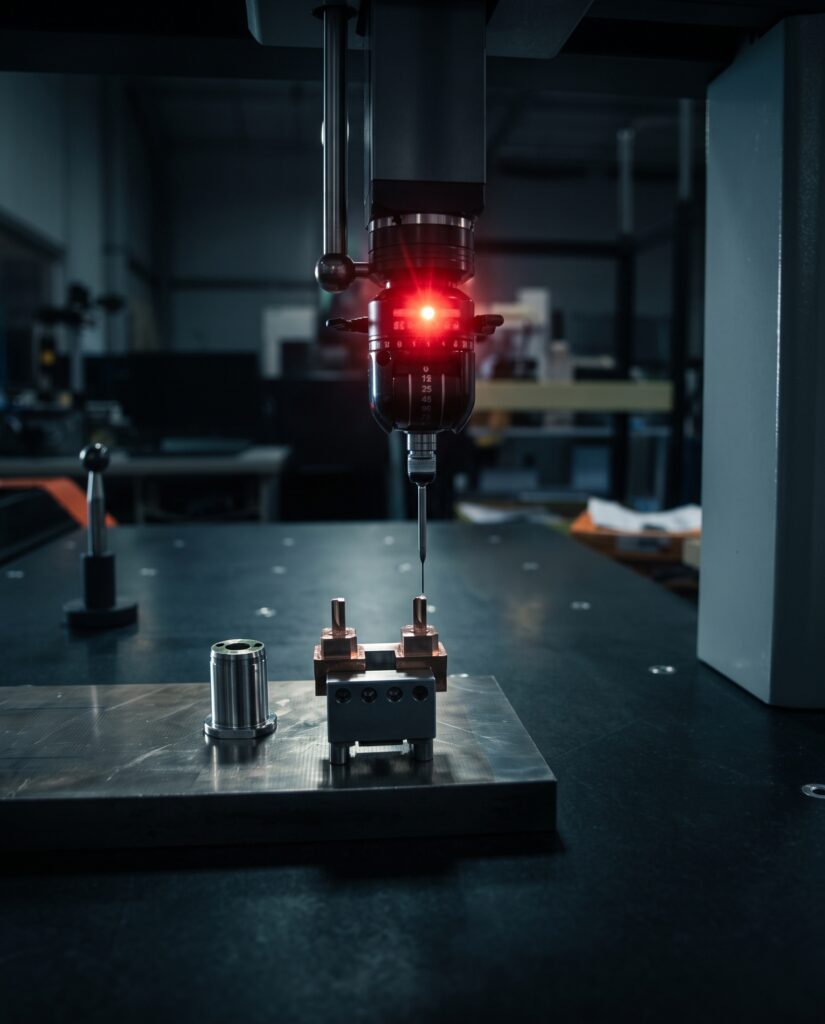
Bond strength gets confirmed by destructive pull testing on real parts, with the goal that the bond is stronger than the silicone tear strength, so the material fails before the interface does. Sterilization validation then confirms the bond and both materials stay stable after the actual cycles the device will see. On top of that sits ISO 10993 biocompatibility testing, which is mandatory for implant or long term tissue contact beyond 30 days. Every step is documented with traceability, because in an audit the paper trail is the product.
What this means when you source an overmolded instrument offshore
Offshore tooling can absolutely build a surgical overmold program at a strong price, but only if the supplier treats substrate prep and validation as first class deliverables, not afterthoughts. The failure mode we see is a shop that quotes the tool cheap, nails the cosmetics, and has no documented primer system, no pull test data, and no IQ OQ PQ package. The part looks perfect and the bond is a coin flip.
When we vet an offshore supplier for medical overmolding, we confirm the ISO 13485 certification is current, we ask for the exact primer and plasma process by name, and we require pull test and sterilization data before the tool ships. That front loaded rigor is the whole point of our injection molding consulting and tooling project management work. If you want the sourcing and qualification handled end to end, that is what our services cover.
Frequently asked questions
Can silicone be overmolded directly onto stainless steel without a primer?
No. Silicone does not bond to bare stainless steel on its own. A reliable bond needs mechanical roughening, plasma or corona activation, and a primer matched to the specific steel and silicone. Skip the prep and the silicone peels.
Why is platinum cured silicone preferred for surgical instruments?
Platinum cured silicone uses an addition cure that leaves no byproducts, so it runs cleaner on extractables and leachables. Peroxide cured grades can leave volatile acids and usually need a post bake, which makes platinum cured the safer choice near tissue.
What sterilization methods can an overmolded surgical instrument survive?
Medical grade silicone overmolds withstand steam autoclave at 121 to 134 degrees Celsius, gamma radiation at 25 to 50 kGy, ethylene oxide, and e beam. The bond has to be validated against the exact cycle the device will actually see.
What validation does ISO 13485 require for overmolding?
ISO 13485:2016 Section 7.5.6 and FDA 21 CFR 820.75 require process validation through Installation, Operational, and Performance Qualification, plus destructive bond testing and ISO 10993 biocompatibility, because the bond cannot be verified by inspection alone.
Sources and standards. ISO 13485:2016, ISO 10993 Part 1, and FDA 21 CFR 820.75.
About the author
Brandon Henderson is President of MoldMinds and a Journeyman Tool and Die Maker with over fifteen years in custom injection molding. He has run tool rooms and managed Fortune 500 tooling programs, and he helps buyers source and qualify offshore injection mold tooling with the documentation and validation that regulated work demands. Reach MoldMinds at moldminds.com or (336) 953 9664.
Need Expert Injection Molding Guidance?
From offshore tooling strategy to moldflow analysis, MoldMinds brings 15+ years of hands-on expertise to your project.
Get a Free Consultation →Have a part like this on your desk?
Send the CAD or the quote. An engineer replies within one business day.