To qualify a China injection molding supplier, you have to look past the ISO 9001 certificate and inspect the audit trail behind it: independent audit reports, dimensional inspection records, and clear tooling terms written into the purchase order. The certificate proves a documented quality system exists on paper. It does not prove that the next mold ships to tolerance or arrives on time.
That gap is where most sourcing mistakes start. Two shops on the same street in Dongguan can both hold ISO 9001 and produce very different parts. The buyers who get burned stop at the logo on the certificate. The buyers who protect their margin ask for the evidence underneath it.
Key Takeaways
- ISO 9001 certifies a documented quality management system, not the dimensional accuracy of any single part.
- ISO 9001 certificates run for three years with annual surveillance audits, so always confirm the certificate is current and covers the exact site and product.
- Verify the certificate through the IAF CertSearch database rather than trusting a scanned PDF from the supplier.
- A qualified shop produces a first article inspection report with every critical dimension measured on CMM data plus material certificates and batch traceability.
- Write mold ownership, subcontracting limits, and lead time into the purchase order, because commercial terms protect you better than an NDA alone.
What does ISO 9001 actually guarantee in a China injection molding shop?
ISO 9001 certifies the quality management system, not the product output. The shop has written procedures, corrective action workflows, document control, and scheduled management reviews. It confirms the shop knows how to document a nonconformance. It does not confirm the shop prevents them.
The certificate is a process credential. It tells you the supplier has a repeatable way to run a business and respond to problems. It says nothing about whether a specific tool holds a critical dimension across a full production run. Buyers who treat the certificate as a product guarantee are reading it wrong.
ISO 9001 is also the baseline. Automotive programs require IATF 16949, which layers PPAP and APQP discipline on top of ISO 9001. Medical device work requires ISO 13485. If your program carries regulatory weight and the shop only holds ISO 9001, that is a scope gap you need to price in before you commit.
How do you verify a China supplier’s ISO certificate is real and current?
Start by confirming the certificate exists, then confirm it covers what you are buying. ISO does not issue certificates. In China they come from certification bodies that should be accredited by the China National Accreditation Service for Conformity Assessment (CNAS). A certificate from an unaccredited body carries little weight.
Check three things before you trust the document:
- Validity window. Certificates are valid for three years and require annual surveillance audits to stay active. Ask for the date of the last surveillance audit, not just the original issue date.
- Scope. The certificate must name the exact factory address and the products or processes you are ordering. A certificate for a sister plant or a different product line does not cover your tool.
- Independent verification. Confirm the certificate number in the IAF CertSearch database run by the International Accreditation Forum. If a shop claims it earned ISO 9001 in two weeks, treat that as a red flag, because a legitimate audit does not move that fast.
What documents prove a supplier’s quality claims before a tooling order?
Ask for the audit trail, not just the certificate. A qualified supplier will share the last independent ISO audit report, internal inspection logs, and a sample first article inspection report from a recent program. The depth of that documentation is a stronger signal than any logo.
In cross border programs, the shops that produce clean records on request are the shops that keep clean records for your parts. When a supplier cannot pull an inspection record without a week of stalling, that is a disqualifying flag. It usually means the records do not exist in the form they claim.
What should a first article inspection report look like?
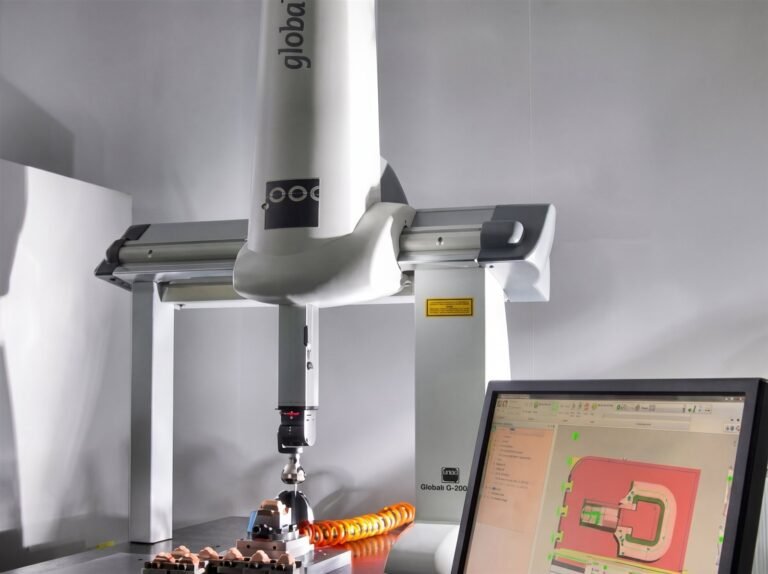
A first article inspection (FAI) report documents the first shots off the finished tool against your 2D drawing. A qualified China mold supplier delivers a full dimensional report on T1 samples with every critical dimension measured, typically on a coordinate measuring machine (CMM), plus material certification and raw material batch traceability.
The T1 dimensional report is the minimum deliverable for first article approval. It shows the tool can produce parts to print. It does not prove long run stability, which is what PPAP capability data addresses next.
When do you need PPAP and capability data instead of just an FAI?
For standard industrial parts with few critical to quality features and no regulatory exposure, an FAI can be enough to approve the tool. For automotive and other regulated work, you need the full Production Part Approval Process (PPAP), which runs through tool trials and proves the process holds over time.
Capability is measured with the process capability index, Cpk. The common threshold for production release on critical dimensions is Cpk greater than 1.33. That number tells you the process is centered and has enough margin against the tolerance band that normal variation will not push parts out of spec. Ask which dimensions were studied and hold the report against your print. The AIAG PPAP standard is the reference most global buyers work from.
What are the biggest reliability risks with overseas molding suppliers?
The three failure modes that cause the most damage are lead time inflation, undisclosed subcontracting, and tooling ownership ambiguity. Each one is screenable before you sign.
| Risk | What it looks like | How to screen it |
|---|---|---|
| Lead time inflation | A quote well under the normal build window with no explanation. | Steel production tooling runs 8 to 14 weeks from finalized DFM approval. Question a much shorter promise in writing before you sign. |
| Undisclosed subcontracting | Your tool quietly moves to a third party shop the supplier never named. | Require written confirmation that production stays at the contracted facility. Subcontracting raises IP exposure. |
| Tooling ownership ambiguity | The shop treats the mold and design data as theirs, not yours. | State in the purchase order that you own the mold and all associated design data. |
How long should a China production mold really take?
Production tooling in steel typically runs 8 to 14 weeks from finalized DFM approval to first article samples, with complex multicavity and side action tools landing at the higher end. Repeat production on an already approved mold runs about 3 to 6 weeks. A quote that is dramatically shorter than this usually hides a soft trigger point, an offshore substitution, or an assumption you did not agree to. The biggest real world cause of missed schedules is not machining. It is the back and forth of DFM review and sample approval, so close DFM early and in writing.
How do you protect tooling ownership and IP across the border?
Put ownership in the commercial terms, not just an NDA. An NDA is a starting point, but in a cross border program the purchase order language is the more reliable protection. Specify that you retain ownership of the mold, the mold steel, and all design data, and that the tool cannot be moved, copied, or used for other customers without your written approval. Confirm in the same document whether any part of production will be subcontracted, because IP exposure climbs the moment a third party shop touches your steel.
A short qualification sequence from the floor
Here is the order I use when I qualify a shop for a customer. Verify the certificate in IAF CertSearch and confirm the scope matches the site and product. Request the last surveillance audit report and a recent FAI package. Read the FAI against a real print and check that critical dimensions were measured on CMM data with material certs attached. Confirm the build window in writing against the 8 to 14 week steel benchmark. Then lock ownership, subcontracting, and lead time into the purchase order before any deposit moves. If a supplier resists any single step, that resistance is the answer.
Frequently asked questions
Does ISO 9001 certification mean a China mold shop makes good parts?
No. ISO 9001 certifies that the shop runs a documented quality management system with procedures, corrective actions, and management reviews. It does not certify that any specific mold produces parts to tolerance. Two ISO 9001 shops can deliver very different results, so you still have to inspect the audit trail and part data.
How do I verify a Chinese supplier’s ISO 9001 certificate?
Check the certificate number in the IAF CertSearch database, confirm it was issued by a body accredited by CNAS, and confirm the scope names your exact factory and product. Certificates are valid for three years with annual surveillance audits, so ask for the date of the most recent surveillance audit.
What is the difference between an FAI and PPAP for injection molded parts?
A first article inspection proves the tool can make parts to print by measuring T1 samples against the 2D drawing. PPAP goes further and proves the process is stable over a run, using capability data such as Cpk greater than 1.33 on critical dimensions. Industrial parts often need only an FAI, while automotive and regulated work require full PPAP.
How long does a production injection mold take from China?
Steel production tooling typically takes 8 to 14 weeks from finalized DFM approval, with complex multicavity tools at the top of that range. Repeat production on an approved mold runs about 3 to 6 weeks. A much shorter quote deserves a direct written explanation before you commit.
Who owns the mold when I buy tooling from a China supplier?
You own it only if your purchase order says so. State that you retain ownership of the mold, the steel, and all design data, and that the tool cannot be moved or reused for other customers without your approval. An NDA alone is weaker protection than clear commercial terms in the purchase order.
About the author
Brandon Henderson is President of MoldMinds and a Journeyman Tool and Die Maker with over fifteen years in custom injection molding. He has run tool rooms and managed Fortune 500 tooling programs, and he now helps buyers across North and South America qualify offshore suppliers, close DFM, and protect tooling on cross border programs. MoldMinds works in one lane: offshore and China injection mold sourcing, qualification, and project management. For related reading, see our guides on injection mold qualification, PPAP for injection molds, and how to source injection molds from China.
Need Expert Injection Molding Guidance?
From offshore tooling strategy to moldflow analysis, MoldMinds brings 15+ years of hands-on expertise to your project.
Get a Free Consultation →Have a part like this on your desk?
Send the CAD or the quote. An engineer replies within one business day.