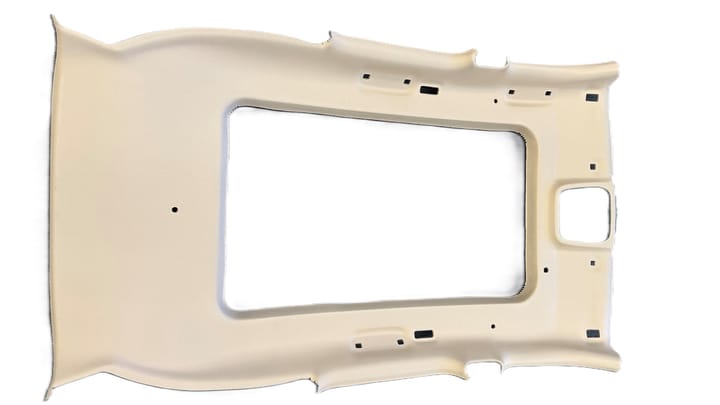
>Running a gate location study and warpage analysis using actual SuperLite S25 material data, once Hanwha Azdel provides a validated Moldflow card, protects that investment. In our experience, T1 dimensional rework on a headliner-scale tool runs $8,000 to $25,000 and adds 4 to 6 weeks to your qualification schedule.
Weld line placement matters more with recycled-content resins. The interrupted polymer chains in regrind produce weaker weld lines than virgin PP at equivalent processing conditions. A moldflow study should confirm all weld line locations fall in low-stress zones before the tool design is finalized.
What OEM Sustainability Mandates Mean for Your Tooling Spec Sheet Right Now
EU ELV Directive requirements are cascading into US OEM program specifications right now, and the material spec on your tooling brief may already be misaligned with your program’s recyclability obligation.
The EU End of Life Vehicles Directive (2000/53/EC) requires that 85 percent of vehicle weight be reusable or recyclable. That regulation applies to vehicles sold in Europe, but global OEM platforms that share body architecture between European and North American variants must meet the standard across the entire part design. If your headliner is on a shared platform, the material spec on your US-sourced tooling program is already subject to EU recyclability requirements, whether your procurement team has written it into the brief yet or not.
OEM sustainability teams are now writing minimum recycled content percentages into interior trim bills of materials before the tooling brief is issued. If the material is changing from virgin PP to a recycled-content composite between DFM sign-off and RFQ issue, that change needs to be captured in the tooling brief before your supplier starts quoting. A misalignment discovered at T1 means rework at full tooling rates.
Procurement leads: if your sustainability team has specified a recycled-content material for an interior trim component and the tooling brief still references virgin PP processing parameters, your program is misaligned. Resolve it before the RFQ goes out.
Can Your Offshore Mold Supplier Handle Recycled PP Composites? Questions to Ask Before You Issue an RFQ
Not every offshore mold supplier with a strong virgin PP track record is qualified for recycled-content composite programs. Most Chinese suppliers have extensive experience with virgin PP and glass-filled PP. Recycled-content PP composites are a different process discipline, and the questions below separate suppliers with documented capability from suppliers who will learn on your program.
- Can they provide process sheets from a completed rPP or recycled-content composite program? Not similar material references. Actual process sheets, barrel temperature profiles, and first-article dimensional reports from a comparable part geometry and surface area.
- Are they running Moldflow with a material-specific card for rPP composite, or a generic PP card? If they cannot show a validated material card for the actual resin, they are guessing on cavity dimensions.
- What is their barrel temperature control tolerance? Recycled-content PP requires tighter temperature consistency than virgin PP. Specify plus or minus 5°C across all barrel zones as a minimum qualification requirement.
- What cooling line configuration are they proposing for the headliner geometry? Ask for a cooling channel layout drawing with water temperature delta specification. If they cannot produce this before tool design sign-off, the cooling plan has not been engineered.
- Can they deliver CMM first-article data on a part with comparable surface area and wall section? Headliner tools are large. Suppliers who only inspect small components may not have the fixturing to hold a headliner for accurate CMM measurement.
- Do they have documented shrinkage validation data comparing rPP to virgin PP in similar part geometry? If the answer is no, they have not run the comparison. That validation needs to happen before steel is cut, not during your T1 run.
In our injection molding consulting practice, we screen offshore suppliers on rPP composite capability before the RFQ goes out. Suppliers who cannot answer these questions with documented evidence are not qualified for recycled-content composite programs, regardless of their general PP track record.
Virgin PP vs Recycled PP Composite: Where the Tooling Cost Math Actually Lands
The cost difference between a clean T1 and a failed T1 on an rPP composite program is $8,000 to $25,000 plus 4 to 6 additional qualification weeks. The table below shows the processing and tooling variables that determine which outcome you get.
| Property | Virgin PP (Homopolymer) | Recycled PP Composite (rPP) | Glass-Filled PP (30% GF) |
|---|---|---|---|
| Shrinkage range (%) | 1.5 to 2.0 (ISO 294) | 1.4 to 2.3+ (lot variable) | 0.4 to 0.7 |
| Melt temperature range (°C) | 220 to 270 | 220 to 270; tighter control required | 240 to 290 |
| Recommended steel grade | P20 | P20 minimum; H13 if abrasive fillers present | H13 (mandatory) |
| Warpage risk level | Moderate | Moderate to high | High (anisotropic shrinkage) |
| Gate sensitivity | Low to moderate | Moderate to high | High |
| Cycle time impact | Baseline | Similar; allow 5 to 10% buffer for process development | Similar to baseline |
| OEM recyclability compliance | Recyclable; no recycled content credit | Recyclable and recycled content credit | Difficult to recycle; no recycled content credit |
Switching from virgin PP to rPP composite on an existing mold design does not add tooling dollars if the switch happens before steel is cut. A headliner-scale offshore mold that qualifies cleanly runs $55,000 to $120,000 depending on part complexity and cavity count. A T1 that fails dimensional requirements because of unvalidated shrinkage data adds $8,000 to $25,000 in steel rework and 4 to 6 weeks to your schedule.
Front-load the material study and moldflow analysis. That is where the cost protection is.
Frequently Asked Questions
Does recycled polypropylene composite require different mold steel than virgin PP?
Not always. The answer depends on the filler content in the composite. If SuperLite S25 includes glass fiber or abrasive mineral filler, P20 will show premature gate and runner wear. Specify H13 gate inserts at minimum. For unfilled or natural fiber rPP composites, P20 at 30 to 34 HRC is acceptable. Confirm the filler type directly with Hanwha Azdel before your tooling brief is finalized.
What shrinkage rate should I spec when tooling for a recycled PP composite like SuperLite S25?
Do not target a single value. Per the Injection Molding Handbook (Rosato), regrind variability in recycled-content PP composites can push actual shrinkage outside the 1.5 to 2.0 percent range established for virgin PP homopolymer under ISO 294. Request validated shrinkage data from Hanwha Azdel, build it into your Moldflow material card, and set cavity dimensions to the midpoint of the validated range with tolerance for the full lot-to-lot spread.
Can an existing injection mold designed for virgin PP run a recycled-content composite without retooling?
Possibly, if part tolerances are generous and geometry is simple. For a headliner-scale component with tight fitment requirements, we would not count on it. The shrinkage shift and MFI variability of rPP composite relative to your tool’s original tuning make a process qualification run mandatory before production. Budget material and machine time for a formal first-article study before committing to production volumes.
How does recycled content percentage affect cycle time and part consistency in automotive interior molding?
Higher recycled content increases lot-to-lot variability in melt flow index, which affects fill balance, pack time, and gate seal timing. These effects compound on large-part programs like headliners. Plan for 5 to 10 percent longer cycle time during initial process development as you dial in barrel temperature profiles specific to the actual rPP composite MFI. Consistency improves once the process is locked to the specific lot characteristics.
What OEM sustainability mandates are forcing the switch to recycled PP in headliners and interior components?
The EU End of Life Vehicles Directive (2000/53/EC) requires that 85 percent of vehicle weight be reusable or recyclable, creating direct regulatory pressure on interior trim specifications for any vehicle sold in Europe. That standard cascades to global OEM platforms, including US-engineered vehicles sharing architecture with EU variants. OEM procurement teams are now writing minimum recycled content percentages into interior trim RFQs across North American programs as a result.
How do I vet an offshore Chinese mold supplier for recycled resin processing capability before issuing an RFQ?
Ask for process sheets from a completed rPP or recycled-content composite program, not just virgin PP references. Request their Moldflow material card and a sample simulation report using that card on a comparable part. Confirm barrel temperature control to plus or minus 5°C across all zones. Ask for CMM first-article data from a part with comparable surface area. If they cannot produce those documents, they are quoting from theoretical capability, not proven process experience.
If your program is specifying recycled-content PP composites for interior trim tooling and you need a supplier audit before the RFQ goes out, our injection molding consulting practice runs that vetting process. If the material risk warrants a simulation study before steel is cut, our moldflow analysis service delivers gate location and warpage analysis using validated material data. Both engagements run faster and cost less than a failed T1.